Today is Halloween, a day overflowing with fun, mischief, and a bit of fright. Kids wear spooky costumes and masks that make them look like ghouls and monsters, and race around the neighbourhood collecting candy. It’s all about late night excitement, where the thrill of the unknown mixes with the sweetness of sugary treats. But as the sun sets on this whimsical holiday, another significant celebration begins in Mexico, the poignant and introspective Día de los Muertos, or Day of the Dead.
Now, you might wonder how two celebrations so seemingly different can coexist just hours apart. Halloween, a festival for children that embodies the spirit of fun, contrasts beautifully with the more adult, themed Día de los Muertos, which dives deep into the philosophical aspects of life and death. While Halloween focuses on the thrill of the eerie and the playful spirit of fear, Día de los Muertos encourages us to honour and remember those we have loved and lost. It’s a collective moment to reflect on life, drawing on the roots of memento mori, a Latin term that reminds us of the inevitability of death.
Throughout Mexico and in various places around the world that acknowledge this sacred tradition, families gather not to trick or treat, but to pay homage. It’s a three day period for remembrance, celebration, and reflection, artfully weaving sombre remembrance with the vibrancy akin to a jazz funeral. Picture this: musicians strumming lively tunes, families gathering around altars adorned with marigolds and sweet bread (pan de muerto), and laughter echoing as stories of loved ones who have passed fill the air. It is indeed a celebration of life through the remembering of those who no longer walk among us.
This brings to mind the thoughts of Montaigne, one of the great philosophers of the Renaissance. Have you heard about his storytelling prowess? If you haven’t dipped into his “Essays” or Sarah Bakewell’s exploration in “How To Live,” consider adding them to your reading list. Montaigne recounted a rather intriguing drinking game from the New World that involved participants passing around a painting of a corpse in a coffin. As they took swigs, they would toast, “Drink and be merry, for when you’re dead you will look like this.” What a cheeky yet profound way to engage with the concept of death! This scene perfectly encapsulates the essence of Día de los Muertos, an invitation to understand that our impermanence is not something to be feared but something to be embraced with joy and humour.
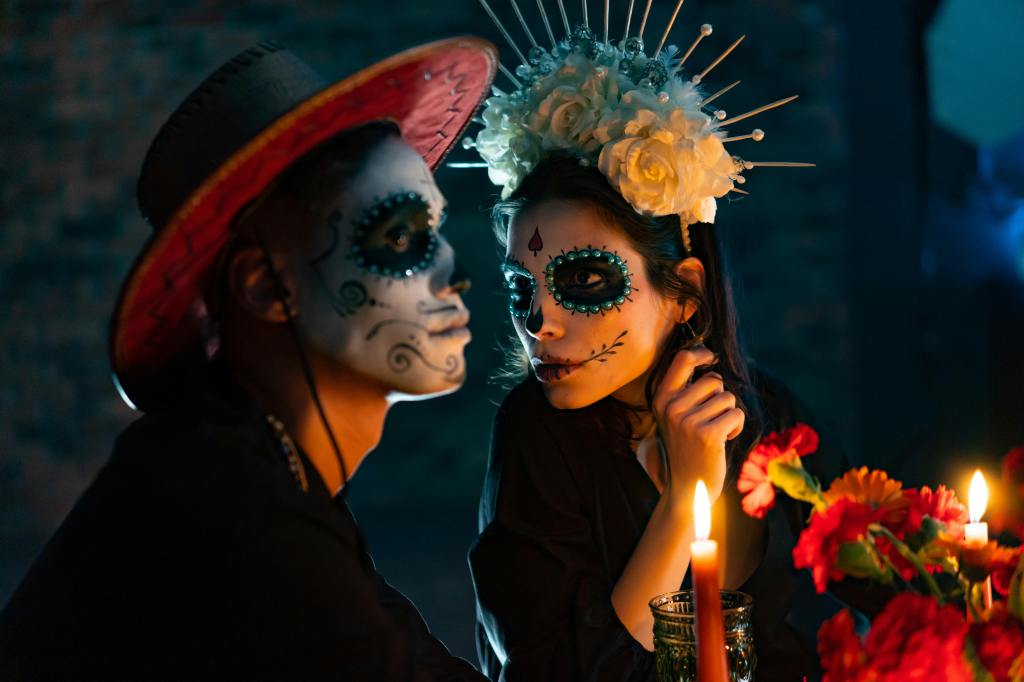
Delving into the imagery surrounding Día de los Muertos reveals a rich tapestry. Skulls and skeletons are not portrayed as gruesome; rather, they become whimsical figures dressed in colourful attire, often holding flowers or engaging in everyday activities. The vibrant face paint transforms people into striking representations of skulls, Sugar Skulls, to be precise, while music and dance fill the streets, harmonising with prayers and memories shared at altars bustling with offerings. This blend of joy and reverence transforms the conversation about death into something lively and celebratory, challenging the notion that such topics should be shrouded in gloom.
When we take a moment to contrast these two holidays, one might find it peculiar, even shocking, to celebrate death, especially with children present. Yet, I wonder: is it truly stranger than our modern approach of banishing thoughts of death from our daily lives? We often allow it to creep into our consciousness only during moments of dread, leaving us unprepared for its inevitable arrival. Pretending that death is a shadow lurking in the corners while we chase after our day to day distractions does little to help us acknowledge its presence. Rather, it stirs feelings of unease when we must finally confront it.
This brings us to a significant point, there’s great value in rituals that allow us to reflect on the reality of death openly. Embracing these moments allows us to process grief and acceptance as we navigate through life. Much like a scheduled visit to the doctor for an annual check up, recognising death regularly can grant us clarity and help us navigate our own lives with greater intention. It teaches us not only to live fully today but also to cherish our connections with others.
Imagine if we incorporated the spirit of Día de los Muertos into our lives more regularly. How would we interact with those we love if we viewed our time together as a fleeting moment, always aware of its impermanence? Would we be more inclined to express our love openly? Would we put down our distractions to savour the warmth of shared laughter and connection?
So, as Halloween comes to a close, and we prepare to transition into Día de los Muertos, let’s embrace the call to drink, be merry, and celebrate life in all its forms. Honour those we’ve lost, light a candle, share a meal, and tell a story about a treasured memory. Allow the beauty of their legacy to shine through as you gather with friends and family, cherishing the relationships that foster joy, laughter, and love.
In the end, the essence of celebrating life and the acknowledgment of death intertwine beautifully. It reminds us that the most significant things we can do are remember our loved ones and cherish the time we still have with those who remain. Ultimately, whether it’s for Halloween or Día de los Muertos, the essence remains the same: we celebrate life, love, and the glorious messiness of being human. This heartfelt embrace of our mortality, intertwined with laughter and joy, is all we can really do, celebrate the journey, remember those who have travelled before us, and find comfort in the bonds we’ve cultivated along the way. So, here’s to dancing with the duality of life and death, an exploration of existence that can only enrich our experience on this wild ride we call life. Cheers!
 The Blog
Leave a comment