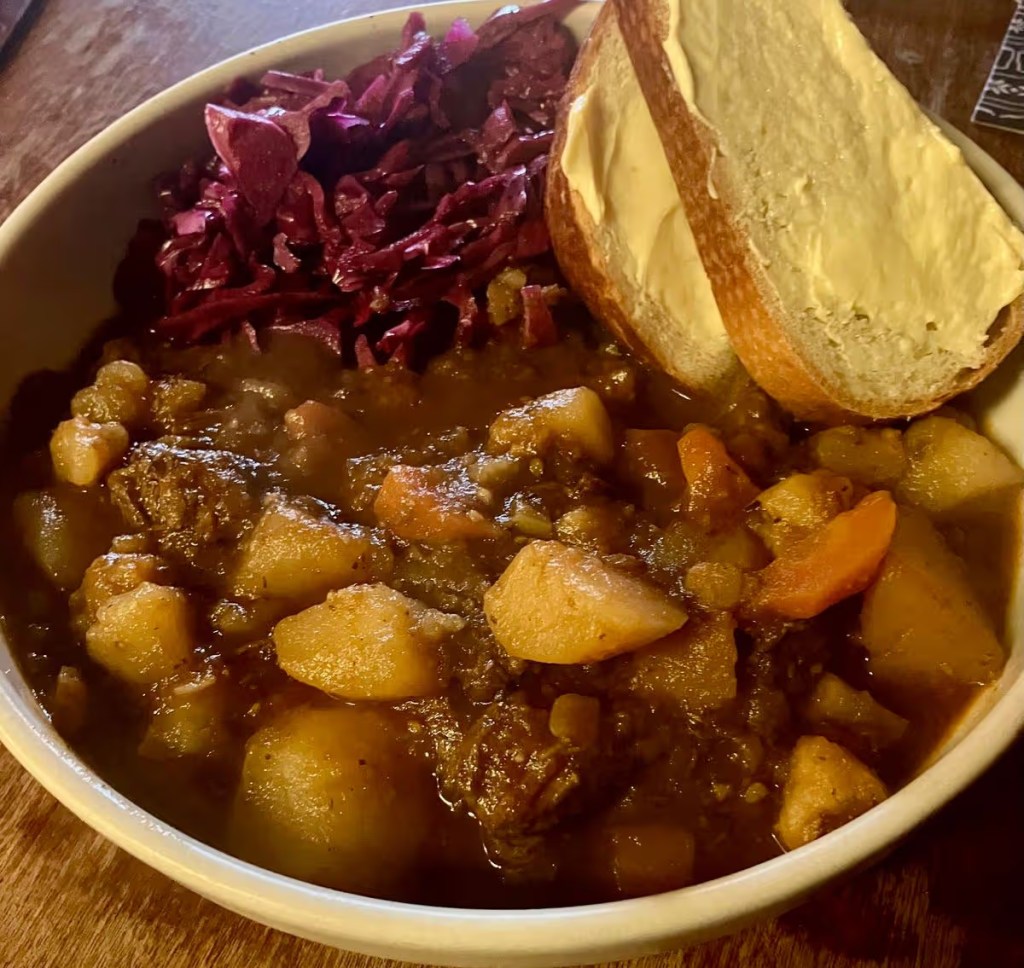
Liverpool, a city steeped in rich history and cultural significance, has its own iconic dish that many locals and visitors alike cherish: Scouse. Known for its hearty flavour this traditional stew has a special place in the hearts of many, particularly on Global Scouse Day, celebrated every year on February 28th. It’s a day when people around the world come together to honour this favourite. So, let’s dive deep into the history of Scouse, share a little about its evolution, and let me take you down memory lane to share how my mum whipped up this classic meal in her trusty pressure cooker, served alongside the zesty tang of pickled red cabbage.
A Brief History of Scouse
To truly appreciate Scouse, we have to understand its origins. The name “Scouse” derives from “lobscouse,” a term used for a type of stew eaten by sailors and dockworkers across the UK, particularly in port cities like Liverpool. The dish was an economical way to feed large families or feed those working long hours, boiling together whatever ingredients were available, usually meat and root vegetables.
The working class roots of Scouse stretch back to the 19th century, during the height of Liverpool’s maritime trade. As a port city, Liverpool attracted a diverse population, leading to culinary fusion. Over the years, the recipe has adapted to include various ingredients, but the essence of the dish remains the same: a comforting, hearty stew that tells the story of the people who made it.
During the potato famine in Ireland in the mid 1800s, many Irish emigrants moved to Liverpool, bringing their culinary traditions which influenced the Scouse we know today. Ingredients like potatoes and carrots became staples in the stew, echoing the recipes of their homeland.
Today, Scouse is not only a dish for the locals but has gained a reputation worldwide. From pubs in Liverpool to dinner tables across the globe, countless families have made it their own, each adding a dash of personal flavor to this historical stew.
Celebrating Global Scouse Day
February 28th has been designated as Global Scouse Day, a celebration that honours the dish and its connection to Liverpool’s heritage. On this day, people from all walks of life, whether they’re Scousers or simply lovers of this dish, gather to cook up their favourite versions of Scouse, share recipes, and promote the joy of communal eating.
Many restaurants in Liverpool serve special Scouse dishes on this day, inviting customers to indulge in this hearty stew. Social media buzzes with posts of lovingly prepared meals, family gatherings, and reflections on what Scouse means to each individual. It’s a heartwarming nostalgic event that highlights the emotional and cultural significance of food in our lives.
Cooking Scouse: A Family Tradition
Now, let me take you down memory lane to share how my mum used to cook Scouse in our family home. The kitchen would be filled with the enticing aroma that brought together our family for a mid week feast.
My mum had a unique talent for transforming simple ingredients into meals that could forge memories; Scouse was one of her crown jewels. One of the best things about its preparation was the way it seamlessly fit into her busy schedule. Growing up dinners were often challenging, Mum had a tight budget, that terrifying pressure cooker became her best friend in the kitchen!
Ingredients You’ll Need
For her Scouse, Mum would start with a handful of basic ingredients, most of which are classics that stand the test of time:
- Meat: Traditionally, scrag end of lamb but beef or even leftover meat works well too.
- Vegetables: Potatoes, carrots, and onions are non negotiables.
- Stock: A good beef or vegetable stock takes the flavour to another level.
- Seasonings: Salt, pepper, and maybe a bit of Worcestershire sauce for that extra zing.
The Cooking Process
Mum’s approach was straightforward, throw everything into the pressure cooking time bomb sometime around breakfast and dish it out at dinner time when the pressure bomb had ceased screaming. However, since growing up a bit of a food snob! I have gentrified the dish a little:
- Prep the Ingredients: Peel and chop the vegetables.
- Brown the Meat: Add a splash of oil to the casserole or slow cooker, allowing it to heat up, and then brown the chopped meat with a dusting of flour. This step is vital for building flavour and adding thickness to the gravy.
- Add Vegetables: After browning, throw in the onions, cooking them until softened, followed by the carrots and potatoes.
- Add Stock: After layering in all the vegetables pour in the stock, filling it up until it covers the ingredients.
- Cook: Leave it in the slow cooker all day, it worked that way for my mum and the smell when you get home from work is magical.
- Serve it Up: I am not sure I could eat the red cabbage anymore, especially the stuff that comes in jars, maybe it’s different in a fancy restaurant, I remember it as a violent assault on the senses even for a kid. Buttered crusty bread is essential though to mop up the gravy, so don’t skip that.
Beyond the Kitchen: Scouse as a Symbol of Unity
As I think back to those evenings and the warmth radiating from our kitchen, it’s evident how Scouse symbolises a deep sense of community. The dish is not just about the ingredients or the method of preparation but about gatherings, family, and love.
Global Scouse Day serves as a reminder that food often transcends cultural boundaries. Scouse has found fans in various parts of the world, often resulting in unique interpretations of the traditional dish. It encourages people to share their stories while strengthening their bonds over a comforting meal.
Scouse Around the World
Social media has played a huge part in this cultural exchange. From Instagram feeds bursting with colourful Scouse dishes to Facebook groups sharing tips and experiences, it’s heartwarming to see how this dish blooms beyond Liverpool.
The Scouse Community
On Global Scouse Day, not just the locals, but international fans engage in discussions about their love for the dish. My own experience is unconditionally nostalgic and deeply sentimental because I moved away from the city a long time ago, but I love to see others share their get togethers on social media. There’s a palpable sense of camaraderie as people swap stories of how their families have cooked Scouse through the generations, turning a simple dish into a collection of cherished family traditions and memories.
Reflecting on Global Scouse Day
As the day approaches annually, or maybe even at unexpected times throughout the year, it’s a perfect opportunity to forge connections with family and friends over something as simple as a bowl of stew.
Our family traditions surrounding Scouse have stayed close to our roots while embracing new influences, and I hope that wherever you are, this dish brings the same warmth and joy to you that it has brought to us.
So, on the next Global Scouse Day, gather your loved ones, cook up some scouse, pour yourself a drink, and prepare to indulge in this iconic dish! Share your stories, maybe you’ll start a new tradition that will carry on for generations to come. Let’s all raise a bowl to this beautiful emblem of community and love that is Scouse!
 The Blog
Leave a comment