The recent news from the Galápagos Islands regarding the reintroduction of giant tortoises on Floreana Island marks a momentous occasion not only for the islands themselves but for global conservation efforts. After more than 180 years of absence, these colossal creatures, which once roamed freely on Floreana, have returned to their native habitat. This initiative, spearheaded by the Galápagos National Park Directorate and supported by the Galápagos Conservation Trust (GCT), showcases the potential of dedication and collaboration in the face of ecological challenges.
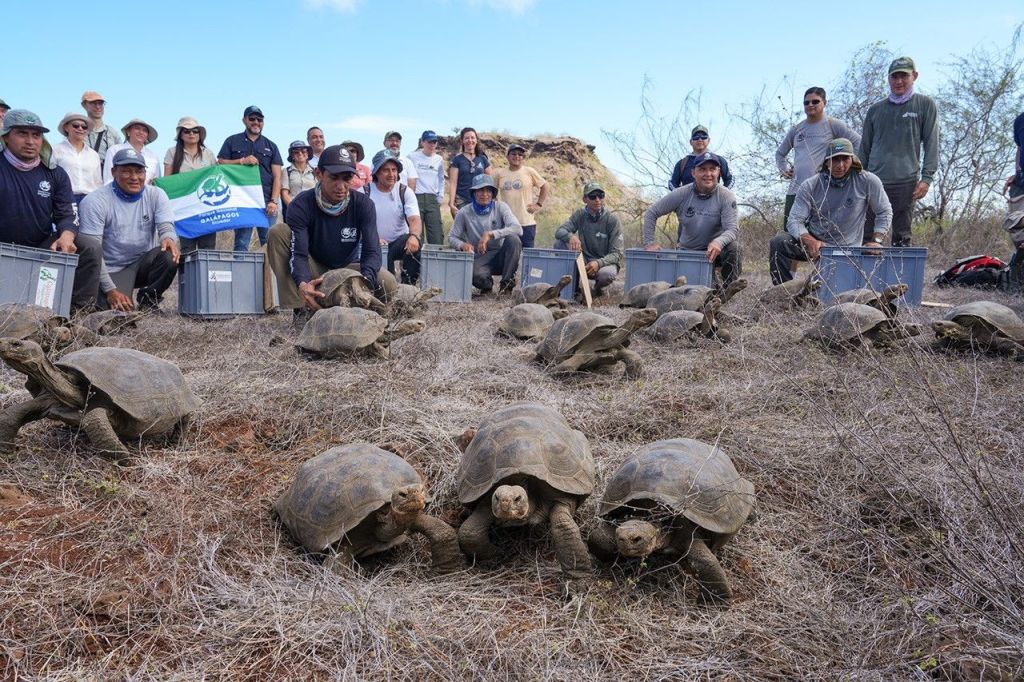
© Galápagos Conservancy
A Historic Milestone
The release of 158 captive bred juvenile tortoises is monumental and symbolises a significant milestone for conservationists. Floreana’s native giant tortoise, Chelonoidis niger niger, was driven to extinction in the 1840s, as sailors exploited them for sustenance during lengthy voyages. This tragic chapter in the island’s history underscores the critical importance of responsible environmental stewardship and reminds us of the detrimental impact human activities can have on vulnerable species.
The successful reintroduction stems from years of meticulous planning and efforts aimed at restoring Floreana’s ecosystem. The journey began in 2008 when scientists uncovered tortoises with Floreana ancestry on Isabela Island. The discovery opened doors to a rigorous breeding program, which has been a testament to the power of understanding genetics in conservation. By utilising hybrid tortoises that are genetically closest to the original Floreana subspecies, researchers have been able to bring these majestic creatures back into the wild.
Ecological Significance
The GCT lauds the tortoises as “ecosystem engineers,” an apt description that highlights their vital role in shaping landscapes and influencing the health of ecosystems. Through their grazing, burrowing, and nesting behaviors, these tortoises create habitats for various species and help maintain the ecological balance. Their return promises to reinvigorate the island’s flora and fauna, providing a boost to the biodiversity that is essential for the overall health of the environment.
Ecologists and conservationists understand the importance of such keystone species, acknowledging how the presence of giant tortoises will help restore and rejuvenate the ecosystems of Floreana. This reintroduction can serve as a model for other island restoration projects around the world, offering a glimmer of hope for numerous species facing extinction due to habitat loss, climate change, and human encroachment.
A Collaborative Effort
Dr. Jen Jones, chief executive of the GCT, articulated the collective emotions surrounding this moment, describing it as “truly spine tingling.” Her sentiments reflect not only the joy of seeing tortoises reclaim their rightful home but also the validation of two decades of collaboration among scientists, charities, and the local community. Such partnerships are essential; they combine a wealth of expertise and resources, demonstrating how collective action can lead to impactful outcomes.
The success of the Floreana Ecological Restoration Project serves as an inspiring case study for other conservation programs. It highlights the necessity of long term commitment, rigorous scientific study, and community involvement. Engaging local populations is critical, as it fosters a sense of ownership and responsibility toward the environmental health of their region.
Looking Forward
The importance of the tortoise reintroduction extends beyond Floreana Island. It symbolises hope and potential for future restoration efforts globally. As we face growing environmental challenges, such successful initiatives remind us of what’s possible when dedication and science converge.
The Galápagos Islands, with their unique and fragile ecosystems, have long been a focus for conservation efforts. This latest development emphasises that even after centuries of ecological distress, recovery is achievable. The reestablishment of these tortoises stands as a beacon of hope, encouraging further endeavours to revive endangered species and restore damaged ecosystems.
The Role of Education and Awareness
Equally important is the role of education in conservation. As the story of the giant tortoises spreads, it serves as an excellent catalyst for raising awareness about biodiversity and the importance of conservation. Schools and organisations can use this opportunity to teach about the diverse ecosystems of the Galápagos and the critical need to protect them. Increased awareness can lead to greater public support for conservation initiatives, both locally and globally.
Moreover, sharing the narratives from the restoration project can inspire future generations to partake in ecological stewardship. Engaging them in initiatives, whether through community service, educational programs, or even eco-tourism, further solidifies the connection between people and the environment.
A Bright Future
The future of Floreana Island is looking brighter than ever, with the successful reintroduction of giant tortoises serving as a key step toward ecological restoration. By 2025, more than 600 hatchlings had been produced, with several hundred large enough to survive in the wild. This is a clear instance where science, leadership, and community engagement have converged to create positive change.
This project not only reinforces the critical role of giant tortoises in the ecosystem but also revives the hope that restoration of island environments is possible, given enough time and effort. The actions taken today will undoubtedly have a profound impact on the ecological landscape of Floreana for generations to come.
Conclusion
The reintroduction of giant tortoises to Floreana Island is not simply a success story about bringing a species back from the brink of extinction. It embodies the principles of conservation, highlighting the importance of collaboration, ongoing research, and local involvement in ecological projects. In celebrating this achievement, we also recognise the ongoing challenges that lie ahead. Climate change, invasive species, and human impacts continue to threaten delicate ecosystems worldwide.
However, with the example set by the Floreana Ecological Restoration Project, there is a renewed sense of hope. It is a reminder of what can be accomplished with vision, commitment, and innovation in conservation efforts. As we reflect on this significant milestone, we are inspired to continue supporting and engaging in efforts that prioritise the health of our planet, ensuring that its rich biodiversity thrives for future generations.
This moment in history stands as a testament to resilience and the enduring spirit of the natural world. We are all custodians of the Earth, and it is our collective responsibility to advocate for and protect the fragile ecosystems that sustain life. The return of the giant tortoises to Floreana Island is more than just a step in a restoration project; it is a call to action for each of us to play our part in nurturing our planet.
https://www.bbc.co.uk/news/articles/c9wn1jrzk4go
https://science.nasa.gov/earth/nasa-is-helping-bring-giant-tortoises-back-to-the-galapagos/
 The Blog
Leave a comment