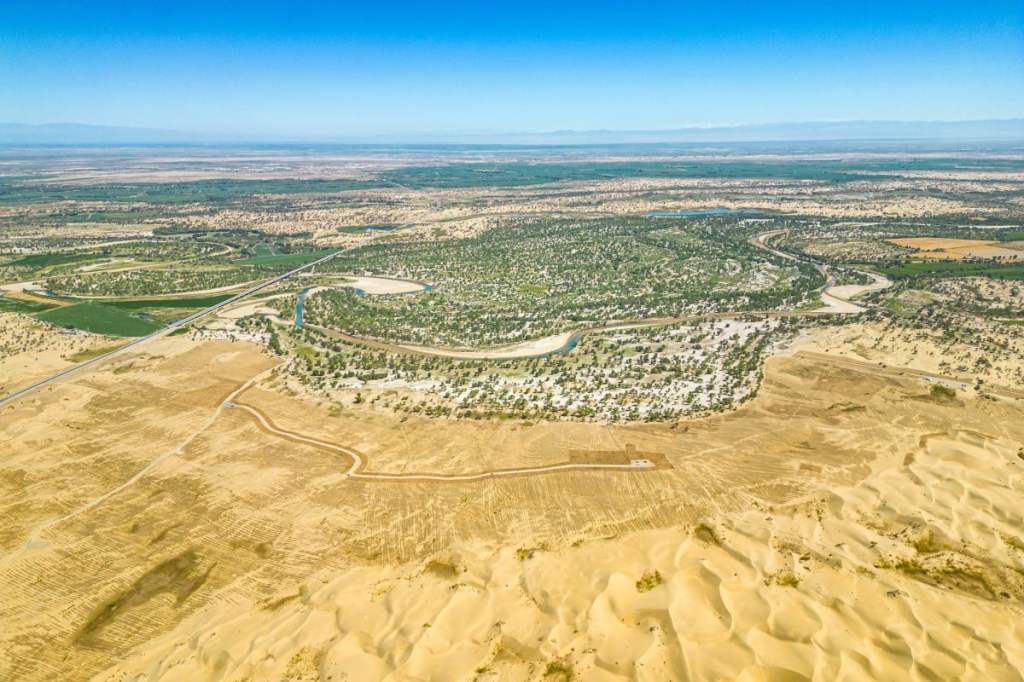
The Taklamakan Desert, known for its extreme dryness and unfriendly environment, has recently become the focus of a significant ecological transformation that highlights the power of large scale environmental initiatives. Stretching across approximately 130,000 square miles, the Taklamakan Desert stands out not only as one of the largest deserts but also as one of the driest, characterised by its shifting sands and harsh climate. For many years, it was deemed a “biological void,” an area where life seemed nearly impossible due to the relentless sands and high temperatures. However, through diligent efforts by the Chinese government, this landscape has undergone a remarkable metamorphosis.
The Planting Initiative and Its Impact on the Environment
The heart of this transformation lies in a massive tree planting initiative that began in the late 20th century. With the realisation that desertification was a pressing issue, especially after urban expansion and agricultural development accelerated around the 1950s, China started implementing the Three North Shelterbelt Program in 1978. Known colloquially as the “Great Green Wall,” this ambitious project aimed to combat desertification by creating a green barrier against the encroaching sands of the Gobi and Taklamakan deserts.
Over the decades, billions of trees have been planted, leading to a reforested area that surrounds the desert. Researchers estimate that over 66 billion trees have been planted across northern China. The success of this initiative has been validated by recent studies, indicating that these trees have made a substantial contribution to the transformation of the Taklamakan Desert.
In recent years, researchers have made groundbreaking discoveries about the ecological benefits of this widespread reforestation effort. The area around the Taklamakan Desert, once deemed too inhospitable to support diverse plant life, has slowly evolved into a functioning ecosystem that absorbs more carbon dioxide than it emits. The once arid edges of the desert are now recognised as a carbon sink, helping combat climate change by capturing significant amounts of greenhouse gases.
The Science Behind the Transformation
What has made this transformation truly remarkable is the meticulous selection of tree species that are well adapted to arid conditions. The trees planted are particularly resilient, capable of thriving in the low moisture environment while aiding in soil stabilisation. Moreover, these tree species have been shown to improve soil health, promote biodiversity, and reduce the frequency and intensity of dust storms, all critical factors in managing the ecological health of the region.
Over 95% of the Taklamakan Desert is covered in shifting sands, creating a high susceptibility to erosion and degradation. The erosion of soil due to wind and storms often exacerbates desertification, leading to a vicious cycle. However, the tree planting campaign has halted this cycle by stabilising the sand dunes and securing the soil in place with their roots. As these trees grow, they not only contribute to carbon capture but also support a variety of other life forms, leading to the revival of biodiversity in an area once marked by ecological desolation.
Combatting Climate Change
The implications of China’s reforestation efforts extend far beyond the local environment. With the planet facing unprecedented challenges due to climate change, initiatives like the Great Green Wall provide a tangible solution through natural means. As the trees mature, they take carbon dioxide from the atmosphere, thus reducing the overall concentration of greenhouse gases. The findings indicate that the active absorption of CO2 by this newly formed forest could play a vital role in global climate strategies.
By converting the Taklamakan Desert into a carbon sink, China has not only taken a step towards mitigating its own environmental issues but also contributed positively to the global effort against climate change. This successful model illustrates how ecological engineering and restoration can yield significant benefits, acting as a beacon of hope for similar initiatives around the world.
The Challenges and Criticisms
While the successes of the tree planting project are laudable, it is also crucial to address the criticisms and challenges that have accompanied such a grand initiative. Experts have raised questions regarding the sustainability of these forests, particularly concerning water usage and the potential impacts on local ecosystems. Some argue that the sheer number of trees may put a strain on already scarce water resources, making it vital for future expansion efforts to be mindful of local hydrological systems.
Furthermore, the effectiveness of the Great Green Wall in genuinely reducing sandstorm frequency remains debated among researchers. While there is evidence of positive effects in some areas, determining the direct impact of the tree planting on sandstorm mitigation requires ongoing study.
Looking Ahead: A Greener Future
China completed the encirclement of the Taklamakan Desert with vegetation in 2024, marking a remarkable achievement in ecological restoration. Forest cover in the country increased from 10% of its area in 1949 to over 25% today. As the trees continue to grow and mature, the hope is that this progress will not only stabilise the region’s ecology but also inspire similar initiatives worldwide.
The story of the Taklamakan Desert serves as a compelling reminder of humanity’s capacity for positive change and ecological stewardship. The ongoing efforts to transform this once barren landscape into a thriving carbon sink exemplify the importance of perseverance, innovation, and environmental responsibility. In a world increasingly burdened by the consequences of climate change, initiatives like the Great Green Wall demonstrate that while challenges are significant, there are pathways to restoration and revitalisation that can lead us towards a more sustainable future.
As we reflect on these transformative endeavours, one truth remains clear: investing in our planet and fostering green growth is not just an act of environmental preservation; it is a vital step towards ensuring a healthier, more resilient world for generations to come.
 The Blog
Leave a comment